About Reflections

In May 2006 we gathered at “The Land” in the Santa Cruz mountains, the place where Chris used to folk dance every Memorial Day and Labor Day weekend, and where we held a celebration of his life in June 1996. During the Memorial Day weekend in 2006 we had a little ceremony there to mark when ten years had passed since he died. Rather than dwelling on the past, we wanted to illustrate how many positive results have been generated by the scholarships that are based on his legacy.

We asked past and present scholarship recipients to write a paragraph or two describing how the education abroad experience impacted them as seen from each person’s current vantage point. It was wonderful to get responses from most members of our scholarship “family.” The statements were put together into a booklet titled Reflections. The collection of impressions is a very personal illustration of the value of providing opportunities for living, studying and traveling abroad.

Since that original booklet, we have received additional reflections, which are all included here as well. Click on the links below to sort reflections by year or country of destination.

Lesa Ritchie (Japan, 2024-25)

I had the wonderful opportunity to study abroad in Tokyo for the fall and spring semesters at Keio University. As a Japanese and History double major with a minor in Education at UC San Diego, I aim to become a high school Japanese language teacher in the U.S. My coursework at Keio included a combination of Japanese history, culture, and language-related classes, allowing me to explore my academic interests in a culturally immersive setting. 

In my application for the Chris Borton Scholarship, I mentioned my excitement about taking Japanese linguistics courses—something not offered at UCSD. Unfortunately, the course was canceled, which was disappointing. However, I was able to take nearly all the history-related courses I had hoped for. With the support of Keio’s excellent faculty, my passion for Japanese history deepened significantly. There is so much to learn, and my classes gave me a strong foundation to build upon. As I traveled to various regions and prefectures—Kyushu, Tohoku, Chūgoku, Kansai, Okinawa, and areas surrounding Tokyo—I was able to apply my classroom knowledge to real-world experiences. Talking with locals and hearing their stories gave me a richer understanding of Japan’s regional histories. These encounters made history come alive and inspired me to consider incorporating Japanese history as a course in my future teaching career. 

Beyond Japan, I also had the chance to travel to Korea. While indulging in delicious baked goods and Korean cuisine, I took time to learn more about the Korean War—an event that is often underrepresented in East Asian history courses, both at UCSD and Keio. This experience broadened my understanding of the region and encouraged me to think more globally about the historical narratives we teach. 

Outside of academics, I was involved in club tennis and collegiate pickleball at UCSD and hoped to continue both in Japan. Initially, I joined the tennis circle at Keio, regularly attending practices and social gatherings. However, I gradually realized that I didn’t feel a true sense of belonging. It was a difficult experience that made me question myself, but it also taught me an important lesson: I don’t have to fit in with every crowd—and that’s okay. 

In the spring, I shifted my focus to pickleball, which turned out to be one of the most rewarding parts of my time in Japan. Pickleball is still a relatively new sport here, with about 5,000 players nationwide, but it is growing rapidly. I became deeply involved in Keio’s newly founded pickleball circle, participated in tournaments across Tokyo, helped organize events, and even appeared in national news features and photoshoots. In July, I will proudly represent Japan in the Asia Pickleball Open—something I never imagined when I first arrived. Unlike in the U.S., where I had only competed individually, I found a true community here. Seeing working professionals pour their energy into the sport after long hours on the job inspired me deeply. Although the level of competition is not as high as in the U.S., the commitment and passion of the players are second to none. 

I also explored other interests, joining pottery and flower arrangement circles and working part-time at a sweet potato specialty café for three months. Even when I didn’t feel entirely at home in these spaces, I learned that it’s part of the journey to find the people and communities where I truly belong. It reminded me that connection takes time, and that being different doesn’t mean being alone—it just means you’re still discovering where you fit. 

Living in Tokyo has been an incredible experience. If I didn’t love surfing in San Diego and dream of teaching in the U.S., I would seriously consider living in Japan long-term. Tokyo is a clean, safe, and convenient city with countless communities and opportunities. While Japan is a relatively homogenous country, my experiences—particularly in the pickleball world—showed me that there is more diversity in people’s backgrounds, values, and lifestyles than one might expect. I believe that anyone, with curiosity and an open mind, can find their place here. 

Studying abroad in Japan has given me countless meaningful memories and life lessons. It has reaffirmed my passion for education, strengthened my love for history, and helped me grow into a more resilient, reflective, and open-hearted person. I will carry these experiences with me into my future career as an educator—and far beyond.

Lavender Robinson (Spain, 2024-25)

When I first applied for a year-long study abroad program, to be honest, I didn’t realize just how long the duration would really last. Before applying, I talked to a few friends about their experiences and, without failure, the recurring phrase they mentioned came to be “I just wish I could’ve stayed there longer.” So, I took that to heart, of course. 

I’m a Spanish major, however, I am not a native Spanish speaker nor did I have many resources to advance my skills. At the time, coursing through my major felt like a waste because I wasn’t able to do the major part necessary for me to complete my studies: speak, read, write, and not even understand the language completely. Therefore, when I signed up to study abroad in Barcelona, Spain for a full academic year, I did so with the strict intent of becoming proficient in the Spanish language and was clear to myself on how to achieve it. 

I touched down in Barcelona feeling confident. I didn’t know that I had made the grave error that many other foreigners make when coming to Cataluña–not understanding just how big of a presence the Catalán culture still lives on and ever-growing in the region. I had generalized all of Spain to be a country with uniform politics and therein the patrimony as well. In a way, I got a two-in-one culture shock experience applying to study at the University of Barcelona. Despite that, I made sure to adjust quite effectively. 

Staying true to my goals, my first and second semester classes were completely taught in Spanish. My first semester I had a literature class and two linguistics classes. To put it simply, I quickly felt that I was way in over my head. In fact, I distinctly remember having to introduce myself in Spanish and desperately trying not to hang my head low in embarrassment quickly after. The three words to summarize my first semester academically are: It was difficult. 

Nevertheless, I entered determined to create the experience I desired to have in my program. During all of this, I made close friends with two girls in my literature class along with another wide group who I met while being out in the town by myself; all people with whom I still keep in contact. Actually, being that one of the girls was also muslim like myself, she later invited me to stay with her and her family in Costa Brava for the religious celebration of Eid. They left me to eat leftovers for weeks! This extreme act of kindness removed from so many feelings of loneliness that were starting to overwhelm during the usual seasonal depression time of year. 

A financial depression for sure made its way to my pockets during the progress of the program. I realized very quickly that I would have to tolerate sensitivities to FOMO as the semester students had the budgets to go on trips every weekend. Meanwhile, the money that I came with was the money that had to last. Thankfully, I not only had the amazing chance to accept the Chris Borton Memorial Scholarship which helped me sustain immensely during the course but moreover the very helpful UCEAP support system that provided me with a connection to a well-paying work opportunity after I reached out.

I don’t regret not traveling outside of Spain as much as others, in fact, I appreciate the opportunity to fully feel confident in achieving my other goal of purely “living like a local” and focusing on other personal motives for venturing here in the first place. I’ve grown to enjoy the simple pleasure of living a slow and quiet life, away from the chaotic and never stopping rat-race that is California and the general American “hustle” culture. I will forever be enamored with the phenomenal Barcelona train system, on its own it’s enough to convince me to move back to live here just a little longer after graduation; seriously, us Americans do not understand what we’re missing out on when it comes to public transportation. 

On top of its fantastic system of metros, buses, and trains, Barcelona has provided me with a well-maintained public and a release of swirling anxiety one surely is to have when they form part of various minority communities in America. It’s to say, Barcelona is extremely safe. I actually had to get used to that feeling of being consistently comfortable in my body and understand that danger is not a pregiven and waiting to strike at moments notice. I will forever love this city for granting me an oversaturated peace. 

My host country has provided me with so many benefits to live modestly that it makes it hard to skip over the casual glee of going grocery shopping for very economic prices. Being able to go into a shopping market with just a 20 euro and walking out with a bag full of items plus money left over is a mere joy I cannot ignore and neither deny that I take the pleasure in doing bi-weekly. 

Given the semester system and the distinct manner in which assignments are handled at UB, it made for more time to be creative and take interest in other hobbies I never would have even considered for myself. Through making connections in local art scenes and getting to know people, I took on a modeling project, a hobby I would have never considered for myself, and ended up appearing in a music video for an upcoming artist here in Spain (Na te debo on Youtube). I love the free time that I’ve definitely taken advantage of and ironically enough it’s ended by me pursuing a career away from the arts and more into the academic field. 

On arrival to my host country, my original career goal was to work as a Photojournalist in Latin América. As cool as the dream sounds, it turns out I only ever really wanted more time to practice my leisurely passions of photography and writing, not necessarily for a vocational purpose. It has occurred to me to follow the path of becoming a translator with interpretation skills that still earns me a life abroad. 

For every challenge I’ve faced in Barcelona, the community has amended for me a replenishing quantity to be grateful. Over everything, I have learned about ambition. In itself carries a patience, persistent yet productive spirit that seeks to intentional nourishment through time, bringing with it the reward of respite after reaching into the unknown. Studying abroad is for many but a year-long term is for the select few who have contemplated well on using their count-down time wisely. I came to Barcelona as a fresh 20 year-old full of wonder and objective, and I’m glad to say that I’ll be leaving stepping into 21 years of life fueled by wisdom and a sense of accomplishment.
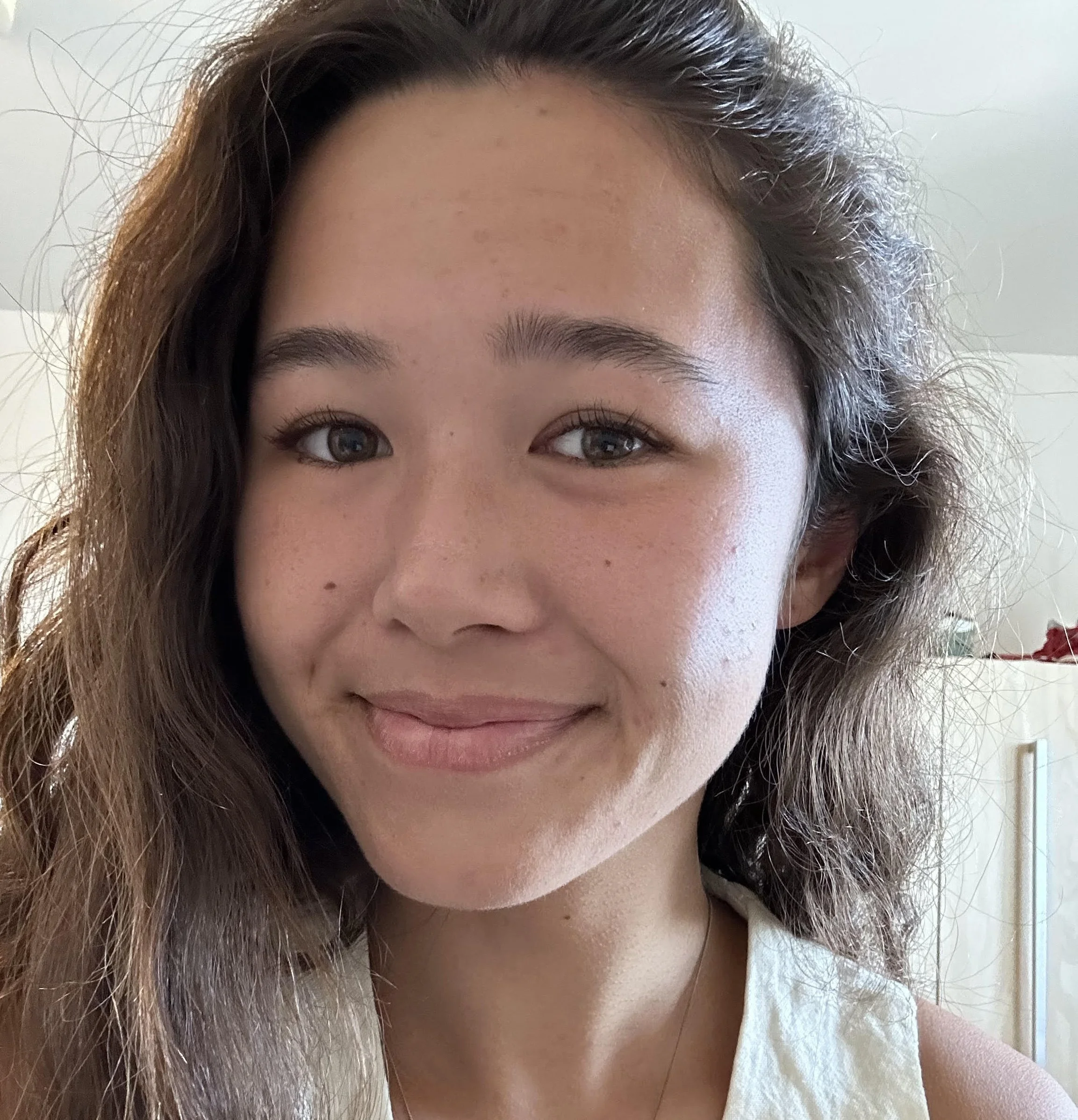
Miguel Ambriz Valdovinos (Spain, 2024-25)

The most challenging part of this experience was spending an extended period away from my family and friends. I have always considered myself to be family-oriented, and this past year confirmed just how important those relationships are to me. Being so far from home pushed me to find new ways to maintain those connections; through regular phone and video calls, exchanging video updates with my cousins and friends, and even mailing postcards to my family. Doing these gestures not only helped bridge the distance but also deepened my appreciation for the people in my life. While it wasn’t always easy, I do not regret the experience one bit. Studying abroad for a year taught me valuable life lessons about love, connection, and the importance of staying grounded in my values, no matter where I am in the world. 

I was surprised by how quickly meaningful friendships formed with other study abroad students. Being away from home and navigating similar challenges brought us closer together much faster than I expected. It often felt like we had known each other for a good while, even though we had just recently met at the start of the program. These shared experiences created a strong sense of community, and the people I met on this journey will always hold a special place in my recollections of Madrid. 

One unforgettable experience was getting the chance to travel on weekends and holidays, either with friends or on my own. I have always treasured spending time at the beach since swimming is one of my favorite hobbies, so I was thrilled to continue that passion while abroad. These trips were not just about getting out of the house; truly they gave me the chance to observe the rich diversity within Spain. I enjoyed noticing the differences in cuisine, local customs, architecture, and even the way people carried themselves in each region. Instead of focusing on traveling outside the country, I made it a priority to explore as much of Spain as possible. I visited towns with immense history, vibrant cities, and one of my favorite places of all - the Canary Islands. Moments like these made my time abroad feel more connected to the country I was staying in. 

Living in a studio apartment during my time abroad allowed me to rediscover my love for cooking since I was not able to do so in the university dorms, of course. I was content that I was able to practice this interest again, and this surely taught me that it is one of my favorite hobbies. Beyond that, I learned that I am more independent and capable than I previously thought. Navigating a new country on my own pushed me to solve problems, advocate for myself, and make decisions without having to rely on others. I learned how to live on my own not just practically, but emotionally. This experience helped me gain more confidence in myself and a deeper understanding of the kind of person I am becoming. 

I think this experience has helped me appreciate the United States a bit more. Living in Spain allowed me to reflect on what I enjoy about both countries. I’ve come to see that each place holds qualities that make them unique. Spain offers a slower pace of life, a strong sense of family/community, and rich cultural traditions, while the U.S. has a fast-paced, opportunity-driven environment that shaped much of who I am today. 

Being raised in the U.S. and having much of my support system there made me realize that I feel a strong connection to the U.S. I’ve gained a deeper appreciation for the freedoms, resources, and diversity available in the country, especially as someone from a working-class background. Living abroad reminded me how valuable it is to learn from other ways of life and to bring those lessons back home. 

I would highly recommend a full year of study abroad. Living abroad for a full year exposes you to the country’s full rhythm of life as you get to experience all the seasons, the highs and lows, and the realities of daily living, including navigating the city and its bureaucracy. Staying for a year allows for a fuller immersion into the local culture than what a short-term stay could offer. Many of the friends I made who were only here for a semester expressed their desire to want to extend their stay when it came towards the end of the academic term. Before starting college, there was always something in me that called me to want to live abroad for a year. I wanted to step outside of my comfort zone and experience something that would challenge and benefit me. This experience helped me explore how I can adapt to new environments, how I manage living independently, and how I stay grounded without my usual support system around all the time. It also helped me grow in confidence, emotional resilience, and develop a more empathetic, global perspective. This is an opportunity that I would encourage no student to let pass. 

Genevieve Riley (Spain, 2024-25)

My choice to study abroad in Barcelona was driven by language. While I didn’t quite reach my goal of fluency, my comprehension of Spanish and comfortability using it have undoubtedly improved. Barcelona is a Spanish-speaking city, but historically the primary language has always been Catalan. The multilingualism at every level of society here was unlike any linguistic landscape I had come across in the United States, and I was so excited to be immersed in it. After spending a year living in the capital of Catalonia and studying Catalan, I can say that the presence of Catalan language and culture is far more ubiquitous than I had imagined going in. 

Today, Barcelona does have ties to the broader national identity of Spain, but Catalonia’s independence movement does have significant support in the region’s capital. And the movement isn’t baseless – in my classes here, I learned about the long history of the suppression of Catalan language and culture in Spain, in addition to Catalonia’s long history of being self-sustaining and autonomous. Nowadays it’s a multicultural and Spanish city, but I couldn’t ignore the fact that Barcelona is also deeply and distinctly Catalan, and that you need to understand Catalan history in order to understand Barcelona. 

I came to Barcelona as a student who wanted to immerse myself in the language and culture of this city, taking it all in with an open mind. I got the experience of getting to know both locals and foreigners in my university classes, as well as in my internship helping native Spanish speakers improve their English conversation skills. In addition to hearing perspectives from students who came from all around the world, I got to know a lot of people who had lived in or around Barcelona for their whole lives. I learned all sorts of things from these people, like how they view their own cultural identities and where they fit in. However, as I was listening to what the people around me were saying – be it my neighbors, my classmates, or the graffiti around the city – I also got a message that the city was under stress. 

While the Catalan people that I met were nothing but kind and welcoming to me, observing the political climate and hearing discourse from the locals made me question how I, as a short-term resident of the city, could be part of this larger puzzle of over-tourism. The movement against tourism in Barcelona has captured worldwide attention, and living there made me see the housing crisis and negative effects of tourism in a different light. The sentiments accompanying slogans like “Tourists Go Home” have captured the attention of news outlets, but in all honesty, it wasn’t something that I had thought much about before moving to Barcelona. 

I don’t have a solution to the issues of over-tourism and gentrification in Barcelona, and I don’t have a way to perfectly defend every angle of the ethics of my being a long-term tourist. What I can say is that studying abroad was my first time living in a major city of this scale, and it set the tone for how I want to carry myself in communities that I’m a guest in. As a student abroad, I wanted to engage with my environment in an intentional way, holding respect for the people who were there before me. I love Barcelona, and I deeply respect it. I learned so much from this city during the short time that it was my home.

Victor Jimenez Alba (Japan, 2024-25)

Studying abroad this past year has been one of the best experiences of my life. Arriving in Japan last September, I was both excited and sort of nervous about being in the country, and I was pretty uncertain of how I would adapt to the country, its people, and the language. After being in this country for a year, I can confidently say that I have definitely changed and grown as a person, and the changes that I have gone through will stay with me forever. 

One of the most challenging aspects of studying abroad this past year, I would say, is the language barrier. Especially since before coming to Japan, I had studied zero Japanese, so using it in a daily and academic setting without knowing anything was extremely difficult for me at first. But as time went on, I got better at communicating, and now, towards my final days in this country, I can now hold conversations in Japanese, and I am very proud of that fact. 

While in Japan, what surprised me the most was how quickly I felt at home here in Japan, going out shopping, hanging out with friends during my free time, they became very familiar to me and became a comfort while abroad. And on the topic of friends, while abroad, I have made lifelong friends and relationships that I will not forget and will cherish when I go back home. 

One moment that I won’t forget is when I went to Yamanashi prefecture with my friends to go to FujiQ Highland, the amusement park, and at the place we were staying in we had a barbecue and did a fire pit, one of the best trips I had while in Japan. 

Academically, my courses at Keio were greatly different from my courses at UC Merced. At UC Merced, my courses are about 50 minutes long, but at Keio, they are 1 hour and 30 minutes long. The biggest difference, though, was the content and the way the professors went about teaching the courses in Keio. I had more group work while at Keio than when I’m at UC Merced, so I’ve become more able to efficiently work with others and get things done quicker, and because I had to work in groups so often, I met many new people from different countries and also got to know about their cultures. 

This year abroad has really opened up my eyes to the world and has taught me a lot about myself. I discovered that I am more independent than I realized, capable of handling most of the challenges I faced throughout the year, and I learned to embrace them as a part of my growth, and they will now serve as lessons that I will take throughout my life. 

Living abroad has allowed me to see my home country from a new perspective. And I can say I am proud to come from where I come from, but I now better appreciate the cultural differences that shape countries and their people. This experience abroad has strengthened my desire to learn about new cultures and languages. 

I wholeheartedly recommend to anyone who can to study abroad for a year. A single semester is a nice experience, but I believe that a year is life-changing because you truly get to immerse yourself with the people around you in the country and build lifelong connections. This year has changed me in so many ways that I didn’t expect, and so I am deeply grateful to the Chris Borton Memorial Scholarship Foundation for making it possible.

Thank you for supporting students like me and allowing us to experience the world.

Saha Kumar (Japan, 2024-25)

My year abroad was one of the most valuable experiences of my life, both personally and professionally. It reshaped my perceptions of both the country I studied and my home country; gave me a new perspective on the things I thought I enjoyed; and helped me develop a clearer understanding of myself and my priorities. 

I’ve studied Japanese for three years and have been fascinated by the language and culture since childhood. Even though I had studied Japanese society in detail before arriving and spoke the language at an advanced level, I still experienced significant culture shock. Over time, I realized that no matter how much I thought I knew, there was always more that I didn’t. 

One of the most difficult challenges was forming social connections. Despite speaking Japanese and joining multiple clubs, I found it difficult to make close Japanese friends at first. University society in Japan is highly collectivist; if most members attend an event, everyone else is expected to join as well. In contrast, American student life is more individualistic — if you can’t make it to a meeting or practice, it’s usually not a big deal. In Japan, when I couldn’t participate for personal reasons, it was sometimes interpreted as a lack of interest or commitment to the group. Further, Japanese university lectures are far less engaged than in the States, with exceedingly few opportunities to interact with and get to know your classmates. Eventually, I came to feel that making meaningful friendships within the university structure wasn’t viable. I was forced to shift out of my introverted habits and start initiating interactions in other settings. I began going out alone and striking up conversations wherever I could — cafes, coffee shops, restaurants. I tested my Japanese in as many places and with as many people as possible. In the end, all of my Japanese native friends came from these efforts. In comparison, I can count the number of friends I made at Keio on one hand. 

Experiences like this and others — those shaped by cultural gaps and differences in value systems — pushed me to reflect on what kind of balance I want to strike — as an American, an Indian, and someone immersed in Japanese culture. In the U.S., my identity never felt particularly unusual, but in Japan, it became something I had to think about constantly. I had to learn to set boundaries and accept that differences in values don’t require an apology or a solution. Instead, I’ve come to see those gaps as spaces I can choose to bridge — or not — depending on the context. That kind of reflection wouldn’t have been possible in a shorter stay abroad, and it was critical to my development both as a future researcher of Japanese history and in everyday life. 

Coming to terms with my identity was the greatest challenge I faced. Several times I felt so isolated, confused, or even angry that I seriously considered quitting the program and returning home. But overcoming those moments helped me build a level of open-mindedness and self-security that reshaped how I live and clarified the path I want to pursue. 

At the beginning of the academic year, I was considering a future in foreign policy or law. But after a full year in Japan, I realized that my passion for research and history runs much deeper. Visits to places like Hakodate and Sekigahara solidified this shift. I still care about international affairs, but now I hope to contribute through a historical perspective instead. I plan to apply to history PhD programs this winter, to begin in Fall 2026. Living in Japan was indispensable in shaping this path. 

One of my most meaningful experiences was visiting Hakodate with my older sister and seeing the memorial of Hijikata Toshizō, a historical figure I’ve studied extensively. I also traveled across Japan to visit medieval castles and the towns around them. These pilgrimages often brought me to rural areas few tourists visit — places with trains every two hours or no station at all. In these towns, I met elderly residents who shared their knowledge and stories. Some had never met a foreigner or had not seen a person of color in years. One of the most powerful encounters was with a 96-year-old Japanese woman who had lived through World War II. We spoke at length about her wartime experiences and how she views Japan today. Her reflections on hardship, postwar transformation, and generational change were moving. In those moments, I was especially grateful for my language skills and the opportunity to hear these voices. It made me feel more connected to the Japan we see today—and to the people who preserve and remember its history. 

If I’m fully honest, I did not enjoy living in Japan. But if I had the chance to choose again, I would still go — because the experience shaped me and taught me things no opportunity in the U.S. could have. It reminded me that even when you think you understand something, there is still so much more to learn — about a place, a culture, or even yourself. I assumed the train system would make everything easier, but in reality, long commutes, overcrowded trains, and long walks in extreme weather made everyday travel exhausting. I missed my car and motorcycle so much that I bought a motorcycle in Japan just two months in. During my first six months, I was homesick, struggling to reconcile the three cultures I belong to, and often tired of being asked by curious taxi drivers about American politics simply because they had few chances to speak to foreigners. 

Now, as I prepare to return to the U.S., I feel a complicated mix of emotions. I’m happy to go back to more familiar systems (like not needing everything on paper), but I’ll miss the quiet charm of my Tokyo neighborhood, the camellias blooming in December, the dear friends I made in my second semester, and the beautiful countryside dotted with medieval castles. 

My study abroad experience was eye-opening. It broke down many of my assumptions about Japan—and even about the U.S. Nothing was predictable. Even though I didn’t entirely enjoy living in Japan, I’m incredibly grateful for the year I spent there and for the opportunities it gave me: to travel, to learn, to meet new people, to be alone, and to grow in ways I never expected. 

Erin Moore (Japan, 2024-25)

My time abroad on the UCEAP exchange program during the 2024–2025 school year at Waseda University was a truly transformative experience that taught me lessons I will carry into every stage of my future. When I first arrived in September, I was overwhelmed and nervous about the year ahead. However, those feelings quickly faded as I met new people and immersed myself fully in the program. I had the opportunity to connect with people from all over the world, each with different backgrounds and perspectives, which challenged me to see my own life, education, and future goals in new ways. 

Waseda University itself provided an eye-opening education, with classrooms filled with students and professors whose diverse perspectives enriched every discussion and interaction. I learned just as much from my peers as I did from my professors, and together they broadened my understanding of the world. The classes at Waseda were taught in styles that were different from UC San Diego, which was slightly difficult to adjust to at first, but I was able to adapt after settling in. I took a wide array of classes, from Japanese language to Design and also Religion, that I could not have taken at my home university. These classes, along with school events, gave me unique experiences and exposed me to topics I would never have encountered without this program. They also inspired me to consider different career paths, including the possibility of working in Japan or pursuing graduate school to further my education which was something I had not previously anticipated thinking about. Thanks to Waseda and the UCEAP program, I have been able to broaden my horizons and discover interests I didn’t even know I had before coming here. 

Beyond the classroom, exploring Tokyo and traveling throughout Japan deepened my knowledge and encouraged my own personal growth. I became more independent, discovered what I truly value, and learned to embrace challenges rather than shy away from them. Looking back, I see how far I’ve come: the person who arrived in Japan was open to new opportunities but still held onto fear of the vast world and uncertainty about the future. Now, I feel much more confident facing the unknown, both in new places and within myself. I’ve learned to be confident in new situations and realized I can do so much on my own. While Tokyo makes solo activities easy and culturally normal, I felt empowered to do anything independently, whether it was grabbing a meal alone or taking a solo trip across the country. And while I still place great importance on spending time with others, I’ve also gained the ability to love my own company and fully enjoy experiences by myself. This sense of balance, between independence and connection, is something I know will continue to guide me even after my time abroad. 

This once-in-a-lifetime opportunity expanded my view of the world and reminded me how much I still have yet to discover. I encourage anyone with the chance to study abroad for a full year to take the leap because it has truly been the most exciting and event-filled year of my life. While a semester abroad is also a wonderful experience, I believe that a year-long program allows you to fully immerse yourself in a new place and live through all its seasons. This program exceeded my expectations tenfold, and I would never trade the memories I’ve made for anything. Because of this opportunity, I now am able to move forward into the future with confidence, no regrets, and a renewed perspective on both the world and myself.